
Weeks 1–2
Pain
Calm the soreness down.
Hands-on techniques and gentle early motion calm soreness and protect the new joint, starting your very first visit.
What We Treat
The hip that still feels tight weeks after surgery. The worry that you’re not putting enough weight on it, or too much. Recovery isn’t automatic, and it starts with a cause-first evaluation, not a guess.
Sound Familiar?
Two or more? Keep reading.
Why It Happens
A new hip doesn’t come with automatic strength or motion. Surgery repairs the joint, but the muscles around it went quiet during the months you were guarding the pain before surgery, and again right after. Scar tissue can tighten the capsule and limit how far the hip moves. Swelling and soreness that linger past the first few weeks keep those muscles from firing the way they need to. And walking differently for months, favoring the other leg, builds habits that don’t undo themselves.
None of that resolves with rest alone. It takes a real, cause-first evaluation to see exactly how much motion and strength you have and where the gaps are. That’s why a generic post-op handout so often falls short: it’s the same handout for every hip, not built around your surgery, your goals, or your walking pattern. Find the real gaps, and the recovery gets a clear plan with milestones.
The Honest Truth
Nobody regrets starting too early. Every week, someone in our clinic says they regret waiting.
How We Fix It
Every plan has clear goals. Here’s what the four phases look like after a hip replacement.
Weeks 1–2
Pain
Hands-on techniques and gentle early motion calm soreness and protect the new joint, starting your very first visit.
Weeks 2–6
Prime
Targeted mobility work restores the hip motion you need for stairs, chairs, and getting in and out of the car.
Weeks 6–10
Perform
Progressive strengthening rebuilds the hip and core muscles that went quiet before and after surgery.
Weeks 10+
Prevent
Walking, stairs, and the activities you’ve been missing get tested under real load before you’re cleared to go all-in: that’s the milestone we build toward.
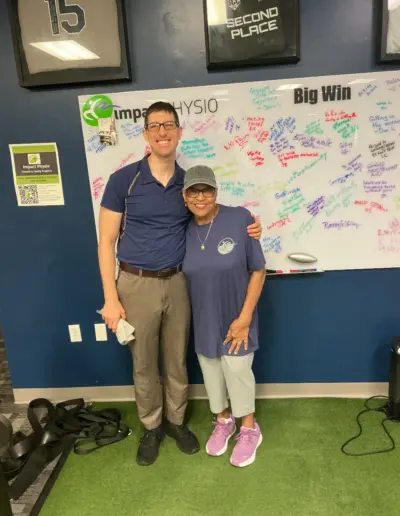
My father enjoyed his experience at Impact Physio. They were very attentive to his needs and helped with his limited mobility.
Shared by Vivian D. · Hip Replacement Recovery
Week 3: leaning on a walker just to reach the kitchen
Month 4: back to walking the dog every morning
Questions, Answered
As soon as your surgeon clears you, often within the first week or two. Early motion and guided walking make a real difference in how much strength and confidence you get back. We coordinate with your surgeon’s protocol and start your evaluation as soon as you’re ready, not weeks after the fact.
That’s exactly what a Physical Therapist tracks for you, every visit. Too cautious and the hip stays weak and stiff. Too aggressive and soreness flares back up. Your plan gets measured and adjusted at every session based on your actual motion and strength, not guesswork at home.
Most patients feel meaningful change within 4–6 visits. A full recovery plan runs through all four phases, Pain, Prime, Perform, and Prevent, typically over 10–12 weeks depending on your surgery and starting point. Either way, you get a clear plan with milestones for motion, strength, and getting back to your life.
Book Your Visit
Request a time and a real person calls you back, usually within two business hours. No phone tree. No ‘someone will reach out.’ Just a plan.
5.0 · 286+ Google reviews
Typical response: under 2 business hours
Step 1 of 5
That’s the hard part done. We’ll call during business hours to lock in your time. We’ll call to find the soonest available time.
Visit Us